

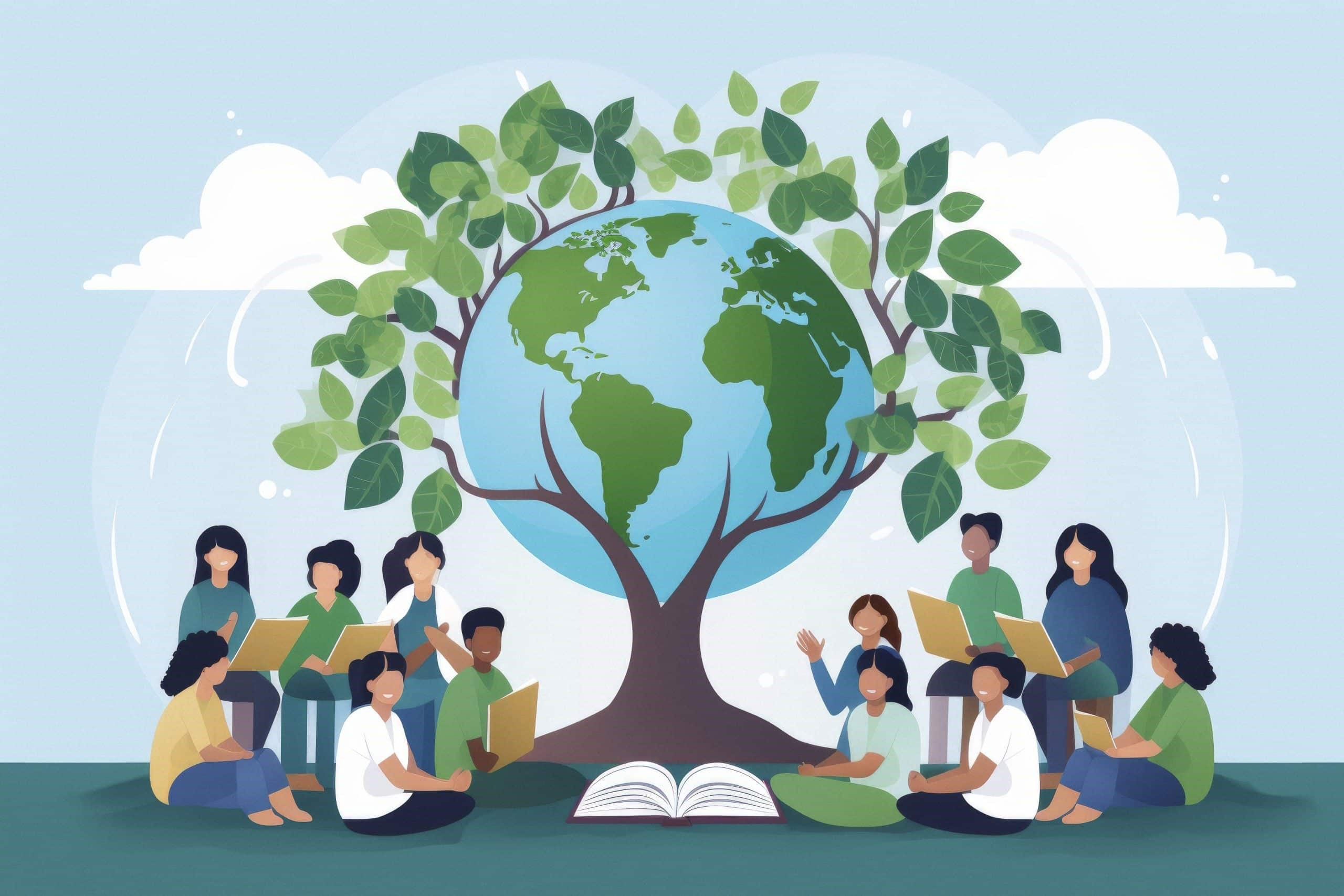
The significance of social sustainability has become more apparent as communities negotiate difficult issues pertaining to social coherence, inclusion, and inequality. The goal of social sustainability is to provide fair institutions that promote participation, opportunity, and dignity for all. In order to achieve this goal, education is essential.
Educational institutions have an impact on civic duty, social ideals, and workforce preparation. Institutions assist students in understanding their role in maintaining societal harmony and shared growth by encouraging inclusive education and ethical consciousness.
The focus of social sustainability in education is on community involvement, gender equality, and inclusive learning environments. Tolerance and respect for one another are fostered when students are exposed to a variety of viewpoints in educational environments. Students are better equipped to operate in multicultural society as a result of these experiences.

Programs for social awareness and community outreach enhance this effect even further. Students who take part in social problem projects get a direct awareness of the difficulties associated with social justice and public welfare. Long-term dedication to social development and responsible citizenship are fostered by such involvement.
By fostering ethical reasoning and critical thinking, education also promotes societal sustainability. Students have the ability to carefully assess social issues and take actions' wider ramifications into account. These skills are necessary for leadership positions in business, government, and civic society.
Sustainable societal growth is facilitated by educational institutions that incorporate social responsibility. Students' involvement in social harmony activities facilitates the conversion of academic knowledge into significant social action.
Education continues to be essential to encouraging social foundations as countries strive for sustainable development and equitable prosperity.
Educational institutions assist create people who can contribute to a more resilient and equitable society by incorporating social sustainability into learning frameworks.